A First Visit to a Quiet Cricket Ground: What to Notice Before Play
A first visit to a quiet cricket ground feels richer when you notice arrivals, small routines, announcements, and the shared hush before play begins.
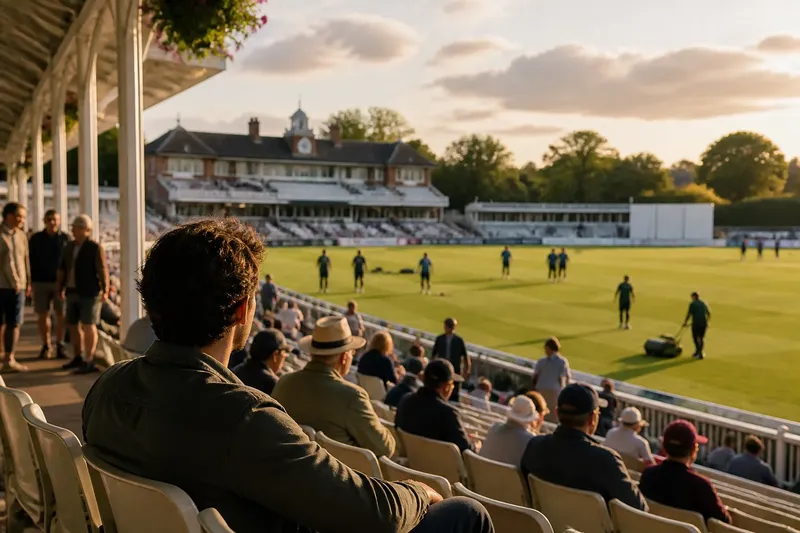
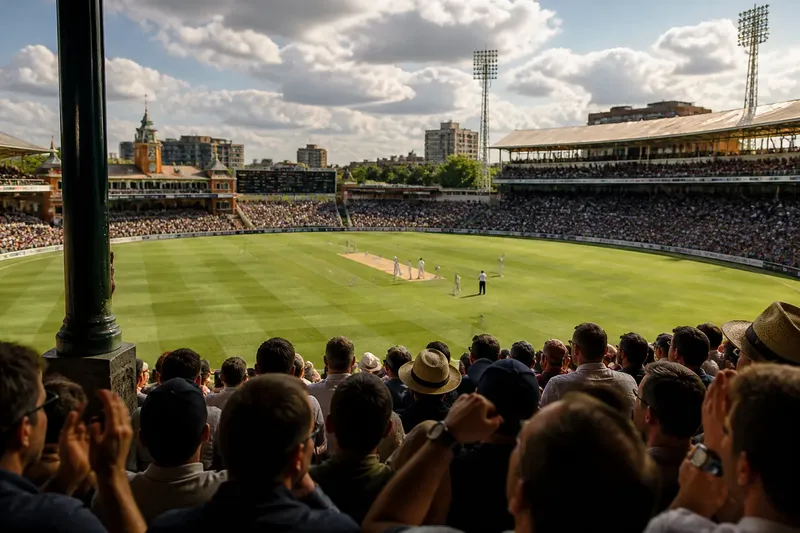
You arrive at a quiet cricket ground while the players are still warming up, and the place seems to be holding its breath. A few people are finding their seats; somewhere near the boundary, a groundskeeper moves across the grass. On a first visit to a quiet cricket ground, the useful question is not what you might miss, but what is changing around you before the first ball.
Give yourself permission to watch without needing to identify every sound or custom. A ground reveals its character through small transitions: an empty row fills, a voice carries from a speaker, a cluster of spectators turns toward the same patch of field. Follow those shifts in order, and the wait becomes part of the match.
Arrive early enough to see the ground wake up
Before choosing a seat, pause where you can take in the entrance, the stands, and at least part of the playing area. Notice the pace of arrival. Some people come directly to their places; others stop to greet someone, read a noticeboard, or look for familiar landmarks. The contrast between purposeful movement and unhurried lingering gives you an early sense of how the crowd is gathering.
Then look for the quiet work that makes a match possible. Staff may be checking access points, volunteers may be answering questions, and ground staff may be tending the boundary or prepared playing area. You do not need to watch anyone closely. Let these activities register as part of the setting, rather than treating the field as scenery that only matters once play starts.
Choose a place that suits your attention, not a supposedly perfect viewpoint. A seat with a clear view of the field helps you follow preparations; a position near a concourse may make arrivals and conversations easier to notice. Keep aisles and working areas clear, and use the venue’s signs to orient yourself.
Notice how spectators make a place together
Once settled, watch the spaces between groups. A person arriving alone may scan the rows before sitting. Friends may leave room for someone expected later. A family might arrange coats and snacks, while regular spectators settle with little discussion. These gestures are ordinary, but they show how people turn seats into a temporary shared place.
Listen for the difference between nearby conversation and a sound that travels. You may hear a greeting across a row, a brief exchange at a kiosk, or a murmur that spreads when someone looks toward the field. Avoid assigning a meaning too quickly. A glance or pause can have several explanations; what matters is whether others respond and whether the moment changes the mood around it.
Imagine you arrive with a friend who has never watched cricket. You both sit where you can see the field and one entrance, and agree to notice what draws people’s attention. When a group turns toward a speaker, you look for what follows rather than guessing at the announcement. The expected result is simple: your attention has something concrete to follow, and the quiet feels less like empty time.
Read the preparations without needing to decode every detail
Turn your attention to the field. Players may stretch, throw, or move through warm-up routines, while officials and staff take up their places. Watch the boundaries between these activities: where people wait, where they cross, and when their movement begins to look coordinated. You need not know the purpose of every drill to notice that the field is shifting from preparation toward play.
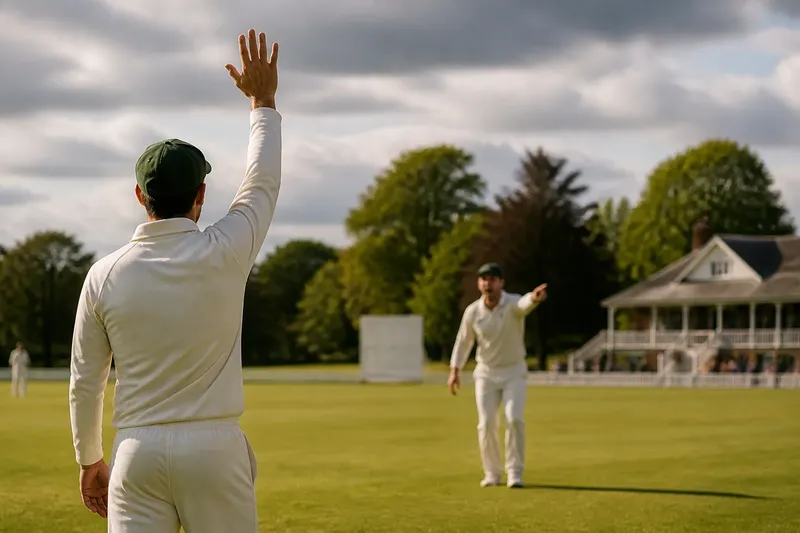
Small physical changes can be more telling than a dramatic announcement. A player who was moving freely may pause to speak with a teammate; spectators may begin to face the same direction; an official may signal that attention should return to the field. These observations help you follow the scene without turning every gesture into a code to solve.
If a printed program or scorecard is available, keep it as a light reference rather than a script. It can help you identify the teams or understand the scheduled start, but the live scene may contain details it does not explain. For venue access, permitted items, and match-day procedures, follow the ground’s posted notices and staff directions.
Let announcements change the shape of the pause
An announcement often marks a shift in how the crowd is listening. The speaker may carry clearly in one stand and faintly in another; spectators may stop talking, keep chatting, or attend only when a name or instruction catches their attention. Notice the response as well as the words. The announcement belongs to the atmosphere partly because people decide, in real time, how much space to give it.
There is no need to strain to catch every phrase. If you miss something that affects your plans, check a display or ask a nearby staff member when convenient. Otherwise, let the sound pass and observe what changes: a queue moves, people return to their seats, or a conversation resumes. The aim is not to collect every detail, but to sense how the ground moves between waiting and readiness.
Follow the last moments before play begins
As the start approaches, the field and the stands may seem to draw closer together. Players take their positions; spectators settle belongings and turn toward the action. Conversation does not necessarily vanish. Instead, it becomes easier to notice brief gaps in it, especially when several nearby people are looking toward the same place.
Give that change room to happen. Keep your phone put away if you can do so comfortably, and avoid filling every pause with a running explanation. The first shared hush may be uneven: one section quiets before another, or a late arrival crosses a row. It still counts as a change in attention, not a demand for perfect silence.
What is not worth the effort is trying to interpret every glance, whisper, or movement as a sign of what will happen in the match. That turns a gentle observation into a guessing game. Stay with what you can actually see: who has arrived, where attention has gathered, and how the ordinary noise thins as play nears.
What should you notice on a first visit?
Where should I sit if I want to observe the atmosphere?
Choose a seat with a view of the field and enough of the stands to see people settling. If you are more interested in arrivals and conversation, a place near a concourse may suit you better, provided you are not blocking anyone’s route.
Do I need to understand the announcements?
No. Listen for their effect on the crowd as well as their content, and check a display or ask staff if an instruction matters to you. You can still follow the atmosphere when a sentence is hard to hear.
What if the ground stays quiet?
Quiet is not the same as inactive. Notice small shifts in posture, the movement of staff and players, and whether people are listening, talking, or waiting. Those changes can make a subdued start feel specific rather than blank.
When does the pre-match atmosphere become part of the match?
There is rarely one sharp boundary. The transition often becomes apparent when players take their places and more spectators orient toward the field, even while a few conversations continue.
When you leave your seat to follow the match, carry one simple observation with you: the ground did not become lively all at once. On a first visit to a quiet cricket ground, noticing how separate arrivals become shared attention is a satisfying way to enter the day. Keep that small change in mind, and the first hush will feel less like a pause before the event than the moment the crowd begins to watch together.