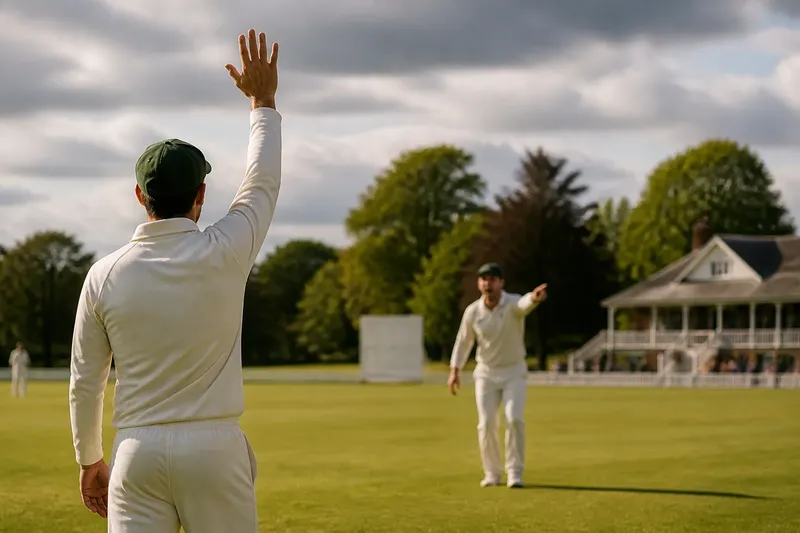
Why a Cricket Matchday Ritual Can Feel Like It Controls the Result
A cricket matchday ritual can steady attention and create belonging; learn why the habit feels powerful without mistaking it for control over play.

You put on the same faded cap before the first ball, then notice a wicket fall as soon as you take it off. A cricket matchday ritual can feel as if it has reached beyond the boundary rope and touched the result. The timing is vivid; the cause is not.
That distinction need not make the habit silly. A repeated gesture can organize attention, express hope and connect a person to other supporters. It can matter to the person doing it without changing what happens in the match.
Why does a cricket matchday ritual feel powerful?
Repetition gives a matchday a recognizable shape. Folding a scorecard into the same pocket, choosing a familiar seat, or waiting to sip tea until the bowler turns at the end of the run-up can mark the difference between ordinary time and time spent watching cricket. The action becomes a small cue: now the match has my attention.
Cricket also invites close watching. Between deliveries, there is room to notice a batter’s stance, a fielder shifting position, the light changing, or a supporter’s own nerves rising. When a personal habit happens near a decisive moment, the mind can link the two because they arrive together. A dramatic wicket or boundary makes that association especially memorable.
The feeling is real, even if the supposed influence is not. The ritual may help someone settle into the occasion, but a cap, cup or seat cannot direct the ball, alter a player’s decision or set the conditions on the field. Treating the distinction as a correction rather than a scolding leaves room for enjoyment.
Does a supporter’s habit affect the match result?
No. A private routine has no mechanism for controlling how a delivery behaves or what players do in response. The result emerges from play and its conditions, not from whether a spectator taps a railing or keeps a particular snack unopened.
It can still affect the supporter’s experience. A familiar action may help someone feel composed, attentive or part of a shared occasion. Those are changes in the person watching, not changes in the match. Keeping the two claims separate lets a fan keep a comforting custom without assigning it powers it does not have.
Say you always sit with a blue scarf across your knees. In an invented situation, your team takes a wicket shortly after you place it there, so you leave the scarf untouched for the rest of the innings. The expected observable result is that you may feel more settled and keep the scarf in place; the next delivery remains outside your control.
Why do coincidences become evidence in a fan’s mind?
A match supplies many moments to connect with a personal habit, but the striking pairings are the ones easiest to remember. If a supporter adjusts a sleeve before a boundary, the sequence may become a story. The many occasions when the same gesture has no visible consequence can pass without leaving a clear impression.
Memory also gives special weight to actions repeated at an emotional pitch. A close finish, a long wait for a decision, or a sudden change in momentum can make a small detail feel charged. Later, the detail can seem like a clue that was there all along, though it did not predict what followed.
This does not mean fans are foolish. Noticing patterns is part of following a game, and ritual often turns uncertainty into something manageable. The useful question is not whether a supporter can stop making the association, but whether they can hold it lightly: “This helps me watch” is a sounder claim than “This makes the team win.”
What makes a ritual comforting rather than burdensome?
A comfortable ritual is flexible, harmless and mainly for the person doing it. It might be packing the same thermos, checking the scorecard before play, or taking a quiet breath when a new over begins. If the routine is missed, the match can still be watched without treating the omission as a threat.
A burdensome superstition starts to make ordinary enjoyment conditional. A supporter may feel compelled to repeat an action, blame themselves for a wicket, or fear that changing seats will harm a player. In that case, the habit is no longer simply part of the day; it has begun to add pressure to an event that is already uncertain.
It is not worth policing every playful gesture or arguing over a harmless cap. A gentle boundary is more useful: enjoy the routine as a personal cue, and do not use it to assign responsibility for the team’s performance to yourself or another spectator.
Can a shared ritual matter without changing play?
Yes. A shared gesture can create belonging even when it has no effect on the score. A group might clap at the same point in an innings, wear club colors, or exchange a familiar phrase as players take the field. The meaning sits in the people recognizing one another, not in the ritual directing events.
That social meaning can be especially clear at a ground. A supporter’s small routine may be private, while the surrounding crowd provides a larger rhythm of anticipation and response. The individual habit can fit inside that collective experience without becoming a claim about cause and effect.
There is also room for humor. Friends may pretend that a particular biscuit is “needed” for the chase, while understanding that the joke is a way to share tension. The distinction matters when someone takes the superstition literally or feels blamed for a bad result; then the group can keep the warmth and drop the accusation.
How can I keep a matchday habit in perspective?
Give the habit a purpose that belongs to you. A scarf can be a familiar texture, a seat can make it easier to see the field, and a cup of tea can mark a pause. None needs to be treated as an instrument for steering the contest.
- Name what the ritual does for you. “It helps me settle” is different from “It protects the lead.”
- Notice the range of outcomes. The same gesture may accompany a wicket, a quiet over or a boundary.
- Leave room to change it. If the usual seat is taken, choose another without making the choice a prediction.
- Keep responsibility with the game. Players make decisions and execute skills; spectators do not cause a result through ordinary habits.
- Check whether it still feels enjoyable. If the routine brings fear or self-blame, loosen it or choose a simpler matchday cue.
Imagine a supporter who always opens a notebook when the innings begins. One day the notebook is at home, so they watch without it and jot a few notes on the back of a scorecard instead. The expected observable result is that the match remains watchable and the habit adapts; no conclusion about the score follows from the change.
What should I do if I miss my usual ritual?
Continue with the match as it is. Find another comfortable place to sit, follow the next over, or take a moment to settle your attention. Missing a personal routine does not put players at risk or make a result more likely.
If the omission creates persistent distress or begins to interfere with daily life, it may help to talk with a qualified mental health professional. That is a matter of supporting your well-being, not correcting a fan’s affection for cricket.
Why do people repeat the same ritual after a loss?
Because the ritual may have been about belonging, attention or comfort all along, rather than a bargain with the score. A loss does not erase what the routine offered during the match: a familiar point of focus, a conversation with friends, or a way to stay present through uncertainty.
A cricket matchday ritual can feel powerful because it gives a spectator something steady to do while the contest remains beyond their control. Keep the habit if it makes the day richer, and let the result belong to the players and the play. That small distinction leaves room for superstition as a bit of matchday color, without making a supporter carry the weight of what happens on the field.